

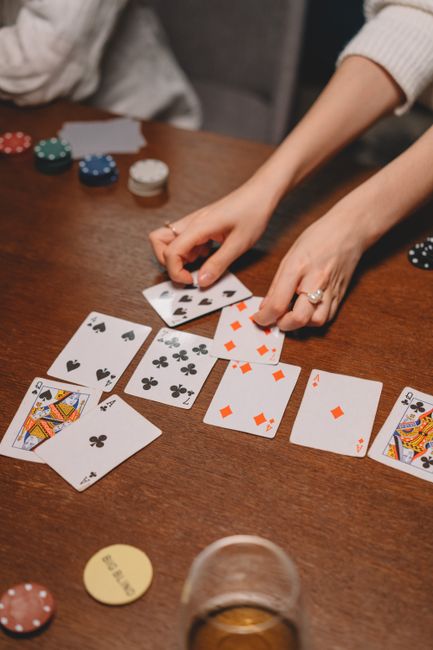
Walk into any online casino lobby today and you'll see thousands of games fighting for your attention. Flashy jackpot tickers, live dealer tables streaming in 4K, poker rooms with six-figure guarantees. It's a lot. The gap between players who treat this as entertainment and those who treat it as a second income is wider than ever, and the tools to close that gap are mostly about discipline, not luck. Let's dig into what's actually happening across the four pillars of iGaming right now, and how to approach each without burning your bankroll in a weekend.
Slots: The Math Behind the Flashing Lights
Slots are the backbone of iGaming revenue for a reason. They're simple, they're fast, and their return-to-player (RTP) percentages can be deceptive. A slot with 96% RTP sounds generous until you realize that number is calculated over millions of spins. In a 500-spin session, variance will chew you up or hand you a windfall, and neither outcome tells you anything about the machine's fairness.
What separates a smart slots player from a button masher comes down to a few practical habits:
- Volatility matters more than theme. High-volatility slots like Money Train or San Quentin pay rarely but can hit 10,000x. Low-volatility games like Starburst pay often but small. Match the slot to your bankroll, not your mood.
- Check the RTP yourself. Reputable developers publish it. Anything below 94% is stingy in today's market.
- Bonus buy features are usually a trap. Paying 100x your stake for a free spins round that averages 95x return is a losing proposition long term.
- Set a hard stop-loss before you spin once. Not after. Before.
A quick reality check: at 96% RTP, for every $100 you cycle through, the house keeps roughly $4 on average. Play 1,000 spins at $1 each and you're statistically down $40. That's fine if it bought you three hours of entertainment. It's catastrophic if you were chasing rent money. This is explained well on rik vip.
Table Games and the Rise of Live Dealer
Blackjack, roulette, baccarat, craps. These games have been around for centuries for a reason: the math is transparent and the house edge is knowable. Live dealer formats have exploded since 2019, and studios like Evolution and Pragmatic Play now run dozens of tables streaming from Latvia, Malta, and studios in the Philippines.
The appeal of live dealer is obvious. Real cards, real wheels, real dealers, and a social atmosphere that RNG table games can't replicate. But there's a catch: live tables usually have higher minimum bets and often worse rules than their digital counterparts. A live blackjack table might pay 6:5 on natural blackjack instead of the traditional 3:2, which quietly triples the house edge on that hand.
Learn basic strategy for blackjack and you'll cut the house edge to around 0.5%. Play by feel, and you'll be sitting at 2% or worse. That difference over a hundred sessions is the difference between a hobby and a leak.
Poker: Where Skill Actually Shows Up
Poker is the one game in the iGaming world where a skilled player can consistently win. Not because the cards love them, but because their opponents make more mistakes. That's it. That's the entire model.
Online poker today looks very different from the 2003 Chris Moneymaker boom. Solvers, HUDs, and training sites have compressed the margins at higher stakes. Micro and low-stakes games are still beatable for a disciplined player, but the days of printing money by playing tight-aggressive alone are gone.
If you're serious about poker, here's what actually moves the needle:
- Pick one format and master it. Cash games or tournaments, not both, at least not at the start.
- Track every session in a spreadsheet or tracker software. Your memory lies about results.
- Review your biggest losing hands weekly. Big wins teach you little; losses are data.
- Bankroll management is non-negotiable. 30 buy-ins for cash games, 100 for tournaments, minimum.
- Play fewer tables. Mass multi-tabling looks impressive but kills your win rate per table.
A common misconception: bluffing is the core of poker. It isn't. Value betting thin, folding when you're beaten, and picking spots carefully are what win sessions. Bluffs are just the garnish.
Sports Betting: Where Most Money Gets Lost
If you want to find the fastest way to lose a bankroll in iGaming, look at in-play sports betting. Pizza ads, parlays, and same-game specials are engineered to feel like skill bets when they're often just long-odds lottery tickets.
Sharp bettors focus on a few things:
- Closing line value. If you consistently beat the closing odds, you're likely a long-term winner regardless of short-term variance.
- Line shopping. Betting the best available price across multiple books turns a losing bet into a break-even one, and a break-even bet into a winner.
- Specialization. Knowing one league deeply beats knowing twelve superficially.
- Ignoring parlays. They pay worse than the true probability implies. House edge stacks with each leg.
Sports betting also has the highest tilt potential of any vertical because matches feel predictable. They aren't. Upsets happen constantly and that's the game working as intended.
Regulation, Responsible Play, and the Boring Stuff That Matters
iGaming regulation has tightened significantly since 2018. The UK, Sweden, the Netherlands, several US states, and most of the EU now require licensed operators to run KYC checks, enforce deposit limits, and use affordability algorithms to flag problem gambling patterns. This is uncomfortable for high rollers but genuinely useful for the 90% of players who never intended to go broke.
If you're playing regularly, use the tools available. Deposit limits, session time warnings, loss caps. Set them on Monday, not after a Saturday night loss. Self-exclusion exists, cooling-off periods exist, and using them doesn't make you weak. It makes you somebody who still gets to enjoy this in five years.
The Bottom Line
iGaming offers something genuinely fun when approached with the right expectations. Slots are entertainment with a small, predictable tax. Live tables are as fair as your strategy allows. Poker rewards patience and study. Sports betting punishes certainty and rewards precision.
None of these is a shortcut to wealth. They're games with math behind them, and the players who last are the ones who understand that the math always wins in the end. Your job is to play for the ride, set limits you can live with, and walk away while it's still fun. That's not a buzzkill philosophy. It's the most profitable one most people will ever adopt.


Comments